Improving the Lukely Brook
Background
The Lukely Brook is an important chalk stream that flows through Carisbrooke on the Isle of Wight, providing valuable aquatic habitat, supporting the ecology of Plaish Meadows which is designated as a Site of Interest to Nature Conservation (SINC), and acting as a key public amenity to local residents. Southern Water operates two licensed groundwater abstractions near to the Lukely Brook, which supply the Isle of Wight with clean drinking water.
Where the Lukely Brook flows through the more urban areas of Carisbrooke, the stream has historically been modified for access (ford crossings) and industry (water mills and ponds). Sluices, weirs and culverts constructed as part of these modifications and the resulting large jumps in water level can stop fish (and eel) from swimming freely up and down the stream.
The works
Southern Water are now undertaking river habitat enhancement work on the Lukely Brook between its source near to Bowcombe, down to Towngate Pond in Newport that will make the stream more resilient to environmental change, improving flows and water depths in the stream, and providing increased public amenity value.
Improved passage for fish and eels

In 2020, Southern Water either modified or replaced four of these historic structures so fish can now travel further up the Lukely Brook to Clatterford (around 1.3 km further than was possible before).Fish passes, sometimes called fish ladders, were installed within existing structures at Carisbrooke Mill and Southern Water’s Waterworks in Carisbrooke. A series of three small weirs were constructed below a culvert at Wellington Road, and the Garden Weir (behind Carisbrooke Road) was replaced with three small rock weirs creating a series of lower ‘steps’ that fish are able to swim up, especially when the flow in the stream is lower like in the summer.
In addition to removing these barriers to fish movement, Southern Water has also agreed with the Environment Agency to reduce the amount of groundwater they are allowed to abstract from the Chalk here. These changes were similarly implemented in 2020 and will make more water available to the Lukely Brook during dry summer periods, helping to protect the valuable ecology it supports.


Improvements at Spring Lane ford
In winter 2022 Southern Water undertook tree management works at Spring Lane.
The works will allow more light into the channel, which in conjunction with further watercourse improvements planned for 2023, will provide improved habitat and fish passage over this section of the Lukely Brook.
The removal of the tall leylandii should allow the Golden Rain Tree to flourish and some smaller native trees will also be planted.

A ‘Stage Zero’ Approach
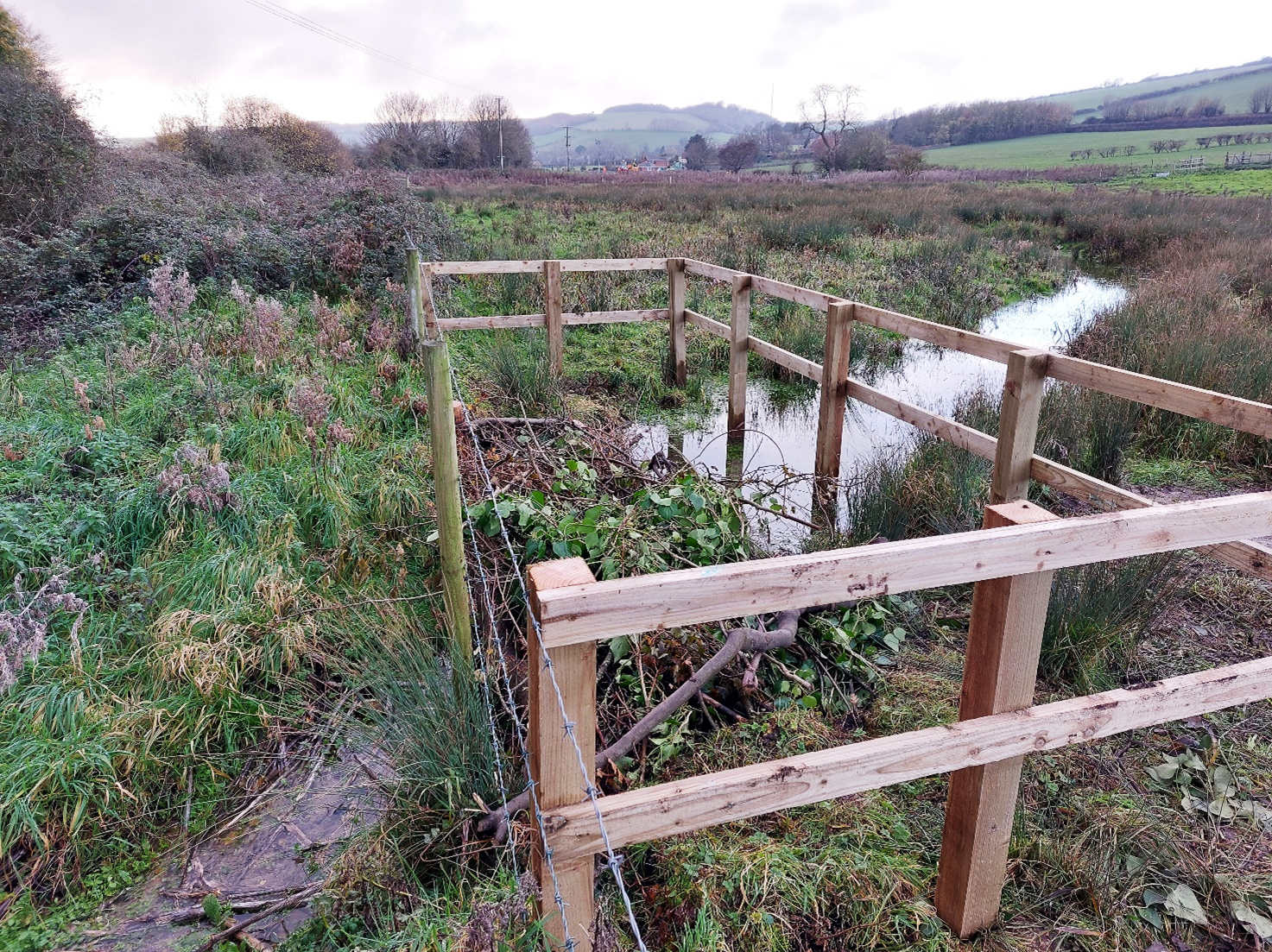
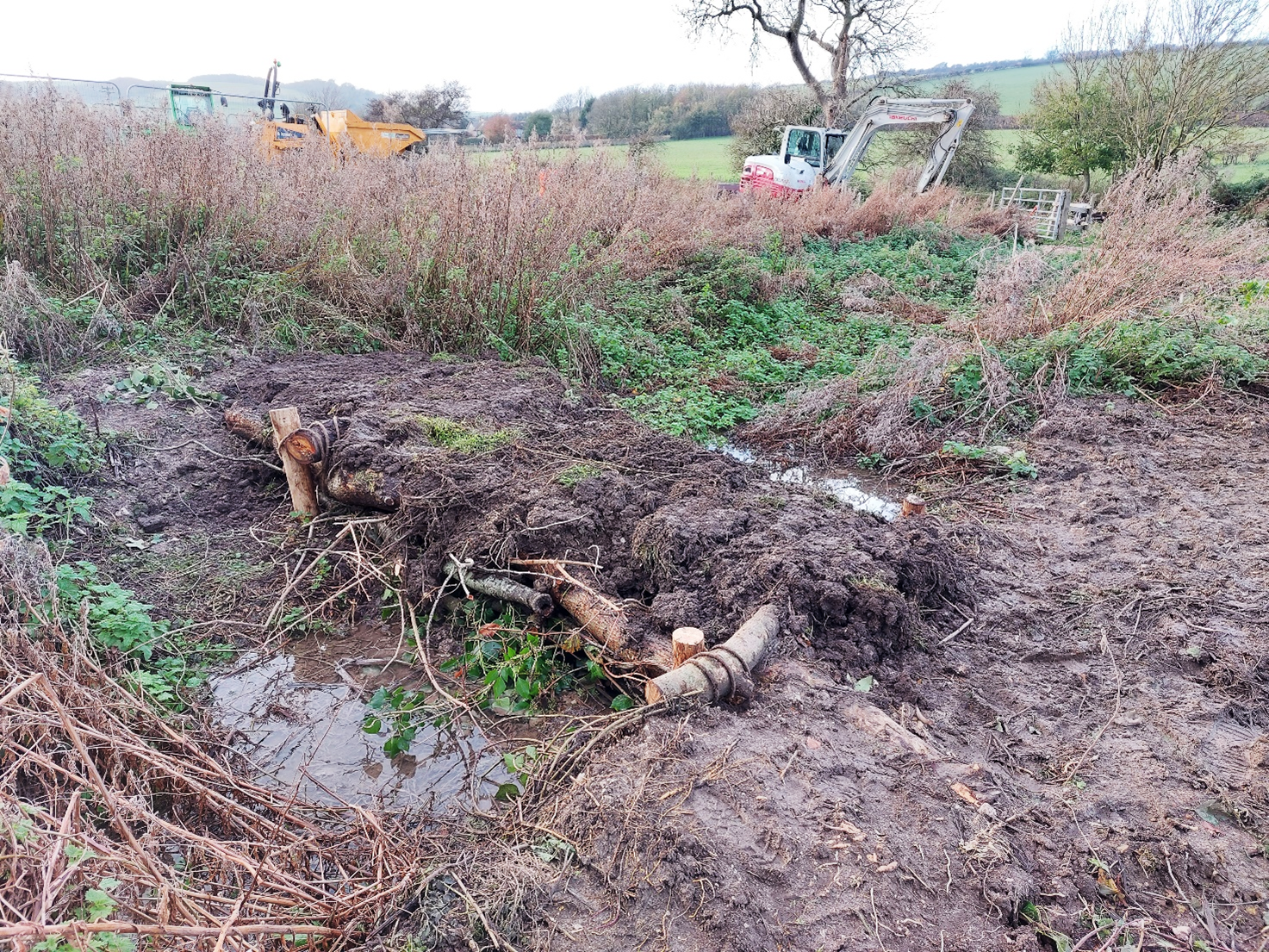
Between November and December 2022, Southern Water undertook construction of an innovative ‘Stage Zero’ restoration scheme on the Lukely Brook at Plaish, southwest of Carisbrooke.
The scheme forms part of a programme of environmental works being undertaken by Southern Water under their Plaish Meadows and Lukely Brook Water Industry National Environment Programme (WINEP) project which aims to increase the ecological resilience and quality of the Lukely Brook watercourse. This follows previous work by Southern Water modifying a number of sluices and weirs on the Lukely Brook to improve fish passage.
The idea behind the Stage Zero approach is that before human influence, many rivers would have comprised multiple braided channels, rather than a single well-defined channel that has become typical of many watercourses nowadays as a result of historical and present-day management. Under a Stage Zero restoration, the existing channel is partially blocked and/or infilled, pushing water out of the banks and allowing the water to find new pathways through the floodplain, developing new channels, improving connectivity with the floodplain and supporting the development of new ecologically valuable habitat.
The Lukely Brook at Plaish was an ideal location for a Stage Zero because the channel had historically been diverted along the edge of the floodplain, away from the bottom of the valley where the channel would have originally flowed. The main Lukely Brook channel has been blocked in two locations using leaky wood mattress structures constructed from branches secured into the banks and bed. Four smaller drainage ditches on the floodplain were also blocked using the same method. The material was sourced locally from tree management works undertaken at Southern Water’s Carisbrooke Water Supply Works where improved daylighting of the Lukely Brook channel was identified as being beneficial.
These leaky structures will allow water to continue to flow through the main channel during lower flows but will cause water to back up and spill out onto to floodplain when flows increase. The resulting ‘wetting up’ of the floodplain is expected to improve the quality of habitat on Plaish Meadows (which is designated as a Site of Importance to Nature Conservation) and is also likely to have secondary benefits such as reduced downstream flood risk.

Froglands Stream
The existing Froglands Stream channel had been historically moved to the edge of the floodplain, causing it to lose much of its natural character and become disconnected from the floodplain. Using a team of specialist contractors and consultants, in May 2023, a new meandering channel was designed and excavated through the floodplain and the previous channel infilled. Bed gravels from the old channel were translocated into the new channel to help macroinvertebrates colonise and a new timber footbridge was constructed to maintain access along a public footpath.
The realigned channel will improve the ecology of the Froglands Stream and Lukely Brook and make them more resilient to environmental change by improving flows and water depths.


Towngate Improvements
The existing pond was artificial in nature with stone banks, sedimentation and the weir acting as a barrier to fish moving further up the Lukely Brook as well as causing significant erosion of the adjacent bank (Picture 1)
The works undertaken in 2023 included removing the stone weir, allowing fish to reach further up the brook and improving flows, reshaping and stabilising the eroding bank and reprofiling the banks to create sloped, natural margins planted with native species (Picture 2). The stone removed from the weir and banks has been used to create seating areas in the slope overlooking the pond so that people can enjoy spending time in this valued amenity space (Picture 3).
Temporary protective netting has been placed around the new plants to protect them from ducks and other wildfowl whilst they establish. The plants will be watered weekly throughout summer to ensure they successfully take root.


Measuring Success
Southern Water have commenced an environmental monitoring programme which will assess the on-going functioning of the scheme over the next 18 months. This includes ecological surveys, water level monitoring and time lapse photography. Additional enhancement works are also planned by Southern Water on the Lukely Brook during 2023 at a number of locations where it flows through Carisbrooke and Newport.
To find out more
Southern Water have kindly provided an information sheet to download. Alternatively please contact Carol Flux on 01983 296244 or email carol.flux@naturalenterprise.co.uk