Driveway Best Practice

One of the major causes of storm overflows that result in sewage being released into rivers and seas is system inundation – too much water entering a combined sewer overflow system. You don’t have to walk far from your house to notice how many driveways have been paved over and if it’s a rainy day you will also realise how many are not impermeable. Water will be rushing off and into the drainage system.
Could you convert your paved, impermeable driveways into permeable surfaces?
To replace more than 5 square metres of front garden with paving you do not need to apply for planning permission, as long as:
- The surface is permeable; or
- The rainwater is directed to a lawn or border within the boundary of the property to drain naturally (it is good to check the absorption of the ground you will be directing water to as clay and some other soil types are not ideal)
If you don’t meet these criteria, you need to apply for planning permission anyway.
Best practice
If you can’t use permeable material, then you need to either:
- angle the driveway so that run-off is towards a permeable surface
- instal drains in your garden
- instal a collection system adjacent to the highway that doesn’t connect to highway drainage
Better still, use permeable surfacing!
There are various options for permeable surfaces which include traditional gravel drives, plastic grids, permeable asphalt, interlocking brick pavers and grasscrete. All of these require an appropriate permeable subbase in order to ensure that they do not require planning permission.
- Plastic grids – these combine gravel with a reinforcing plastic cellular structure to keep it in place. They can also be filled with soil and planted. They should be laid on a well-constructed subbase that uses type 3 or type 4 aggregate (larger sized aggregate.) which will allow good drainage through the substructure of the soil.
- Porous tarmac, including pebble bound with resin is an increasingly popular choice
- Permeable paving – this sees pavers laid with open, permeable spaces between the blocks to allow water to pass through
- Grasscrete – this is a concrete structure which allows grass to grow through but water to drain away through the subbase.
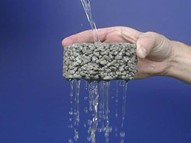
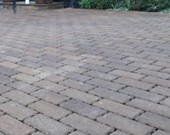
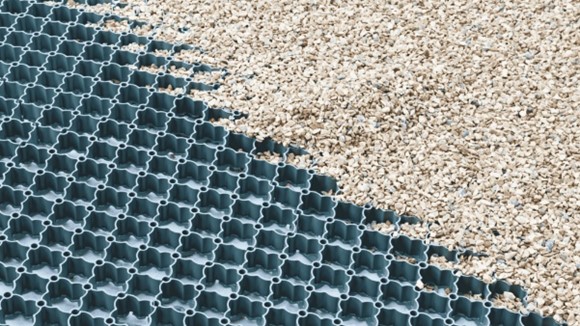
Did you know?
- The extra surface water from a driveway can contribute to local flooding especially when it rains heavily. A driveway measuring 21 square metres can discharge the same amount as 2 baths of water during just 1 hour of normal rainfall.
- Where hard (non-permeable) surfacing allows water to run off a driveway and onto the highway, this extra water enters the highway drainage system via the gullies in the road.
- The highway drainage system is often not designed to cope with lots more water. This could result in flooding to the highway and surounding area.
- Driveway surface water can also be contaminated with fluids such as oil, petrol/diesel, coolant and other contaminents such as brake dust which can make their way into the highway drainage system that often connects to local streams and rivers.
- Paving over entire front gardens can also be detrimental to local wildlife and biodiversity. Insects and organisms have a reduced habitat so there’s less food for mammals and birds.
- When it rains heavily, the water arriving at Southern Water’s treatment works in Sandown is up to 95% rainwater that does not need to be treated. Driveways increase storm runoff therefore contributing significantly towards storm overflows and flooding.
- There are also additional highways requirements when paving a front garden to park cars. It may be necessary to apply for an appropriate vehicle crossover or ‘dropped kerb’. When applying for a dropped kerb you will need to complete the application form provided by Island Roads. Vehicular Dropped crossing – Application Form
Find out more
Careful consideration must be given to installing a water management system such as a soakaway in areas that are prone to ground instability. In such situations it would be advisable to seek guidance from your contractor, and or from an engineer. Failure to do so may cause a risk to the surrounding environment and the future stability of your property. Such locations on the Isle of Wight include Ventnor Undercliff, the Cowes-Gurnard headland, and near cliff tops/coastal slopes around the Island.
These area useful pages:
GOV.UK
Royal Horticultural Society