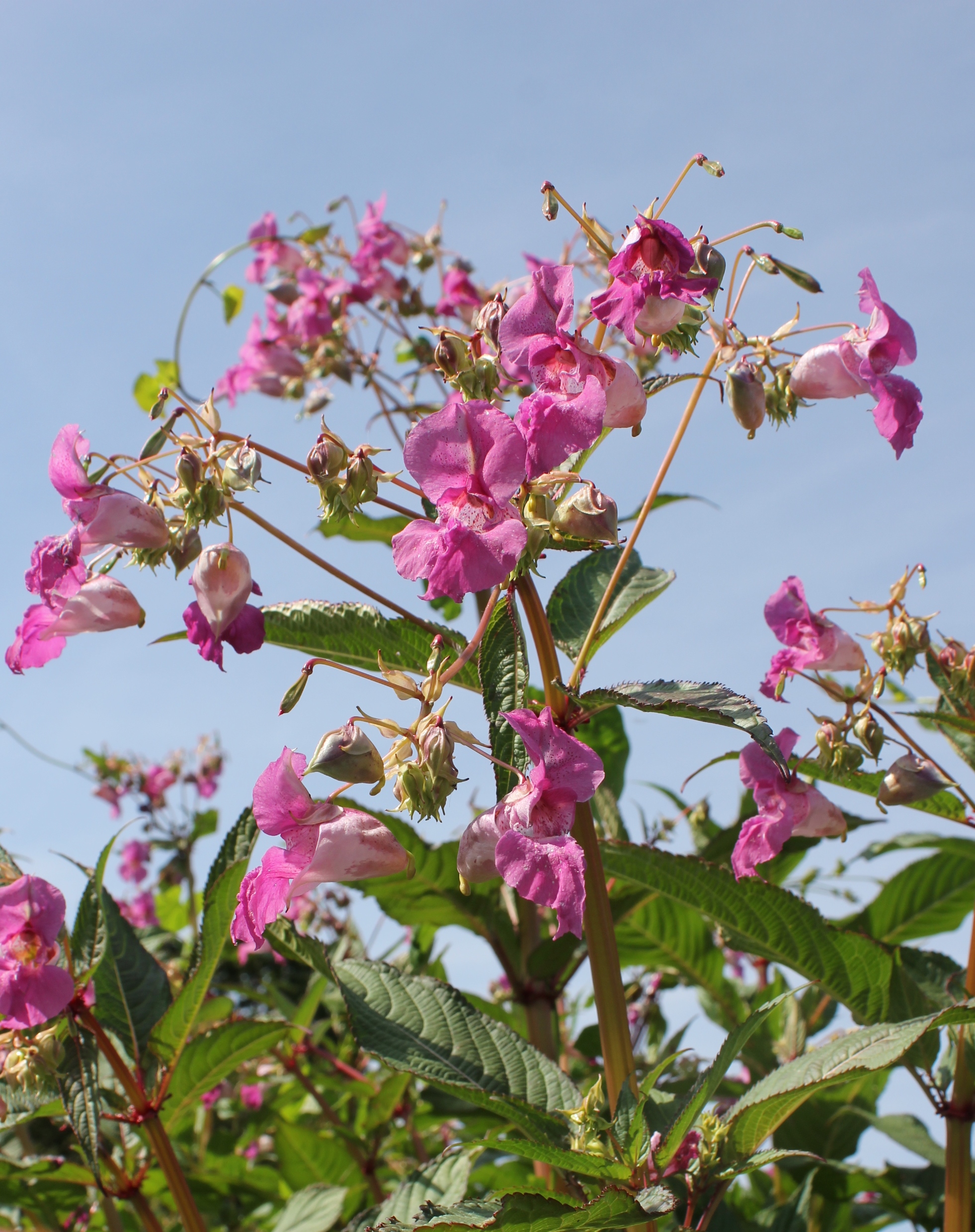
(Impatiens glandulifera)
Himalayan balsam is now one of the most problematic species across Europe, and has reached all continents except Antarctica because of its aggressive growth and complete dominance where it in infects water-courses, floodplains and wet woodlands. Himalayan balsam has spread across the whole of the UK since it was first introduced to British gardens in 1839.
The key to its dramatic success is its explosive dispersal from pods which can catapult seeds over a very wide area. Its large and impressive pink flowers are very attractive to bees and other pollinators so there is never a shortage of new seeds. So attractive is balsam in fact that it out-competes nearby native plants for the attentions of pollinating insects and so reduces their ability to spread only making its invasive tendencies worse!
But there’s more! It outcompetes native plants for light and nutrients and has allelopathic (poisonous) effects on competitors. Recent research has shown that it changes soil chemical properties which makes native plants less able to compete. Himalayan balsam is an annual, dying back in winter to leave bare soil which can expose our river banks to erosion and flooding.
The most common way to remove Himalayan Balsam is to pull by hand. It can also be cut mechanically or with scythes, but needs to be severed below its first node. Spraying is also an option, but as the plant grows close to water, requires a special licence and may be considered a brutal approach as it destroys native flora too.
The Isle of Wight has an annual Himalayan Balsam control campaign and is always keen to hear from potential volunteers and land owners.
Further Reading
Himalayan Balsam Identification Guide
Good Practice Management-Himalayan balsam
Controlling Himalayan Balsam on Your Land
Guide to Himalayan Balsam Control
EA FAQ Using herbicide in or near water